


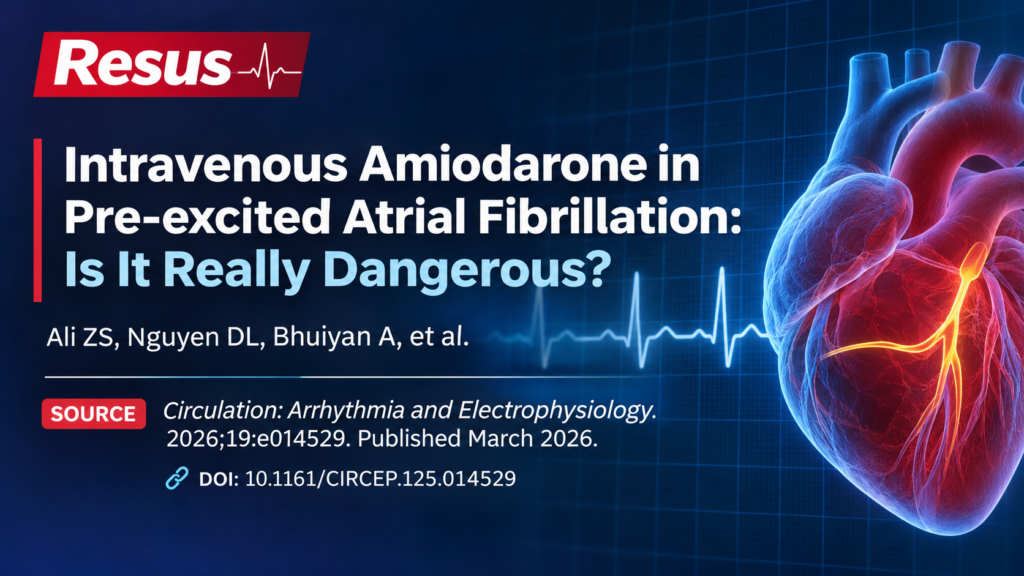
Amiodarone in AF with Pre-excitation: Is it Really Dangerous?
The evidence behind one of emergency medicine’s most familiar warnings.
We have all been taught to avoid intravenous amiodarone in patients with atrial fibrillation and pre-excitation.
The concern is that slowing conduction through the AV node may favour conduction down the accessory pathway, potentially accelerating the ventricular response and precipitating ventricular fibrillation.
But how strong is the evidence?
A recent systematic review questions whether the risk is as common as traditionally suggested. Reports of ventricular fibrillation following amiodarone appear uncommon, although the available evidence is limited and cannot establish safety.
Importantly, current guidelines still advise against IV amiodarone in pre-excited AF. Procainamide or ibutilide, where available, remain preferred pharmacological options for stable patients; unstable patients require prompt electrical cardioversion.
The clinical question: Is this a dangerous drug, or have we overstated the strength of the evidence?
Read the full Resus article —>
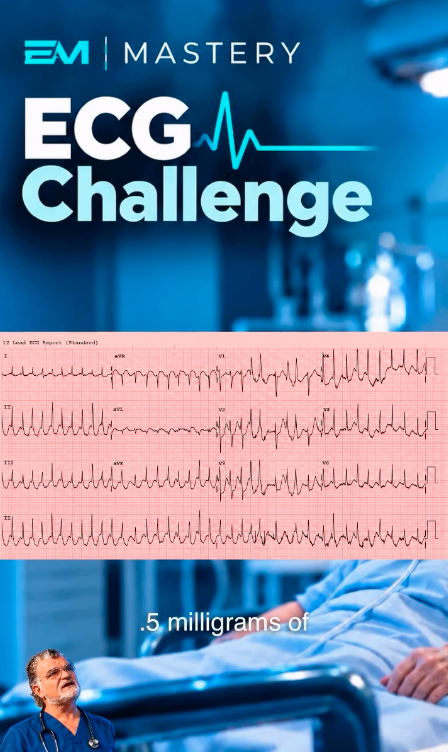
What does the ECG show?
(a) AF with WPW
(b) AF
(c) SVT with Aberrancy
(d) VT
(e) Atrial flutter with a RBBB
What treatment might you avoid?
(a) Amiodarone
(b) Metoprolol
(c) Flecainide
(d) DCR
Which was initially incorrect?
(a) The diagnosis
(b) The treatment
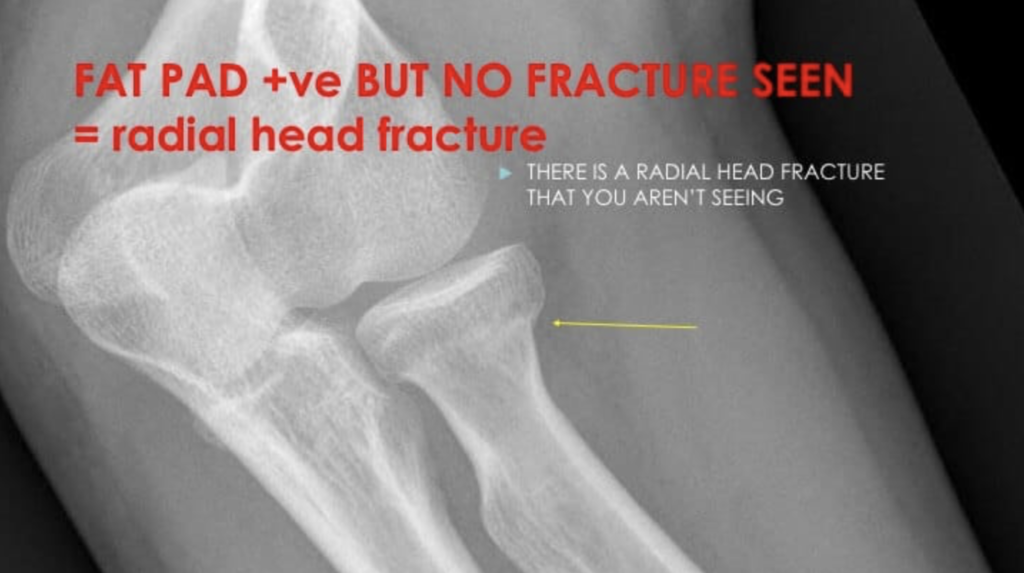
Elbow Fractures: What Are we Missing?
Elbow injuries are common presentations to the emergency department, but some fractures are surprisingly subtle on initial radiographs.
In adults, radial head fractures are particularly important to consider. In children, supracondylar fractures require careful assessment of alignment and neurovascular status.
When reviewing an elbow X-ray, remember to:
- Look for an elbow joint effusion and posterior fat pad.
- Assess the anterior humeral line and radiocapitellar alignment.
- Examine for subtle fractures, particularly around the radial head.
- Document distal neurovascular findings and assess for associated injuries.
A normal-looking X-ray doesn’t always exclude a clinically important injury.
The take-home message: Examine the patient carefully, review the radiographs systematically and don’t ignore an unexplained effusion.
Read the full elbow fractures article —>
Join Us at a Conference or Course
EMCORE Melbourne 19th – 21st March 2027
Cardiac Bootcamp Melbourne 18th March
EMCORE Singapore 14th -16th April 2027
Cardiac Bootcamp Singapore 13th April
EMCORE London 1st -3rd June 2027
Cardiac Bootcamp London 4th June
